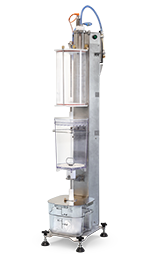
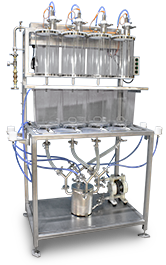
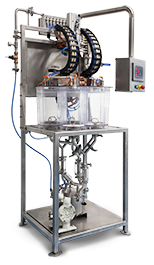
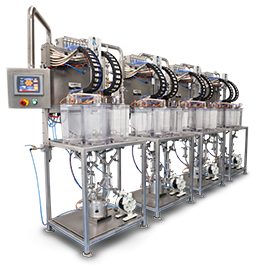





Cold Coffee Brewing Using the Hive Brewing™ Method!

40% Higher Yields than Immersion Brewing
30 Minute Brew Times
2-28 Brew Cells, Scaleable
high volume cold brew coffee brewing solutions

The HIVE BREWING™ cold brewing method explained! The Next Step in the Evolution of Commercial Cold Brew Coffee Brewers

Hive Brewing™ cold brewing process

There are two typical methods for extracting coffee in cold water. Traditional immersion and the Kyoto Drip. Immersion brewing is a passive process whereby coffee grounds are steeped in cold water over 12-24 hours. This method provides little in the way of control of the brew and the long duration brew time, with no refrigeration, is a potential food safety issue.

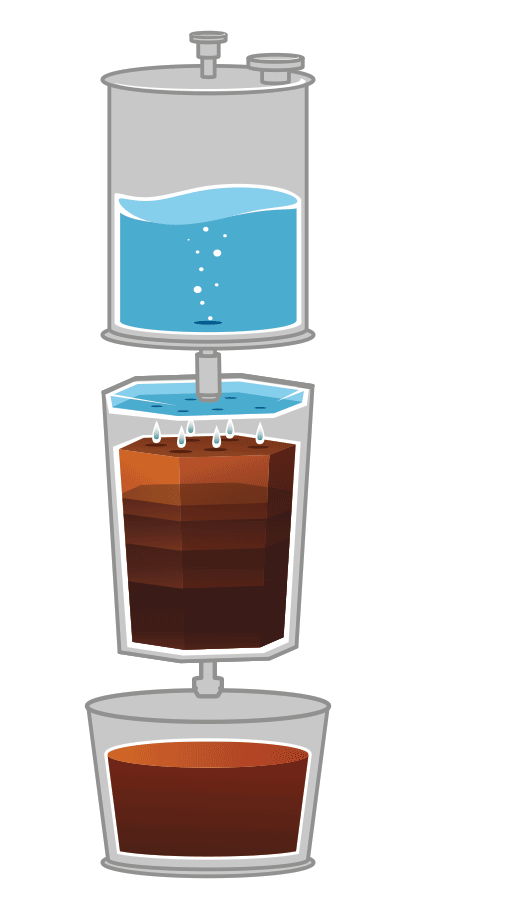
In contrast HIVE BREW™ brewing uses a modified controlled drip method that is an active process whereby cold water is passed through the grind bed at a controlled rate. This active brewing process we call ACE, Accelerated Cold Extraction. It controls and optimizes the extraction process and brews are typically done in under 30 minutes.

The other feature of HIVE BREW™ brewing is that the brew is typically 7.5 TDS concentrate (5 x RTD). We call it Espresso Replacement Concentrate or ERC. This concentrate can replace the espresso shot in Cold Mixed Coffee Beverages. HIVE BREW™ brewing delivers equal cup quality with more consistency, and significantly improved speed of service.

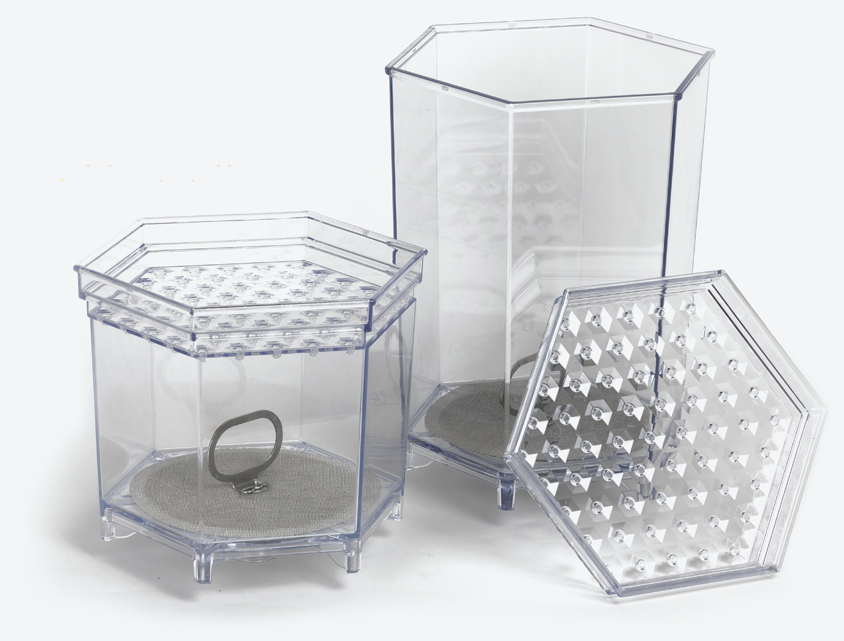
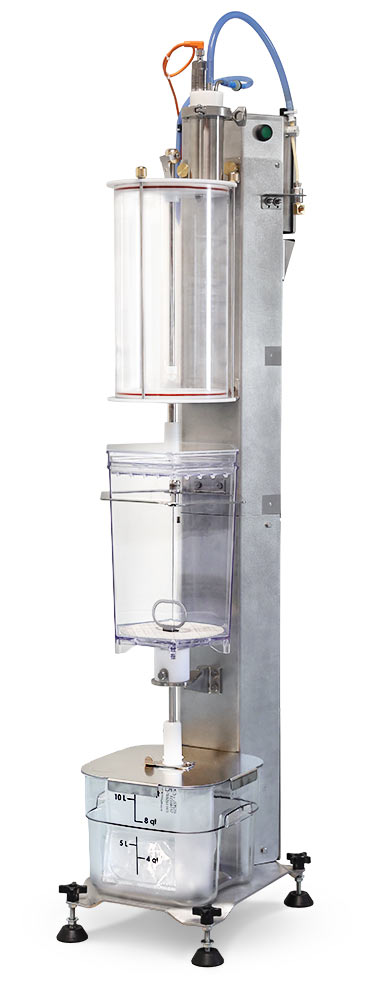
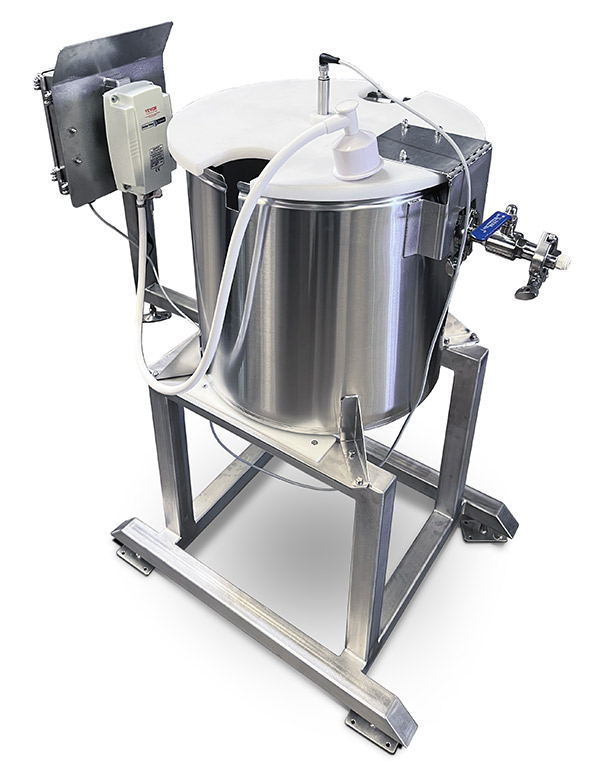
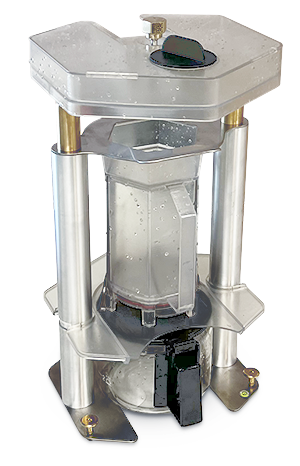
HIVE BREW™ brewing uses a brew cell to optimize taste quality, extraction yields and brew time. The 6 pound cells fit together and can be combined to suit your production needs.

The unique feature of the HIVE BREW™ cell is that the quality and extraction performance of one brew cell can be replicated consistently. Simply adding additional cells provides identical quality and extraction as you increase your production output.

HIVE BREW™ is the best cold brew system on the market because it is high-yield, high quality and fast at under 30 minutes per brew.

HIVE BREW™ systems produce 80 to 5,000 gallons of RTD per 8-hour shift (+/– 10%).

Contact us for more!
Hive Brew Coffee Brewing Expandable Cell

HIVE BREW™ Glossary

HiveBrew™
TORR Industries' patented line of commercial and retail cold coffee brewing systems that use hexagonal brew cells to produce high-yield espresso-strength concentrate in under 30 minutes.
ERC (Espresso Replacement Concentrate)
Cold-brewed coffee concentrate, typically 7.5 TDS, produced by HIVE BREW systems. Designed to replace hot-brewed espresso shots as the base for cold and mixed coffee beverages.
ACE (Accelerated Cold Extraction)
TORR's active, controlled drip brewing process in which cold water passes through a pre-infused coffee grind bed at a controlled rate, extracting concentrate in 25 to 45 minutes.

HIVE BREW Cold Brew Coffee Process

  1. Pre-infusion: Pre-infuse ground coffee (400-500 micron grind) with approximately 0.5 gallons of room-temp to lukewarm water per 6-lb brew cell, using a Bloom Bag, Manual Fusion, Semi-Auto Fusion, or Auto Fusion system.
  2. Load brew cell: Evenly load the pre-infused, uncompressed grounds into the HIVE BREW cell.
  3. Controlled drip extraction: Pass cold water through the grind bed at a controlled rate using the dispersion plate, extracting concentrate over 25-45 minutes depending on the brewer model.
  4. Collect concentrate: Collect the resulting Espresso Replacement Concentrate (ERC), typically 7.5 TDS, for use as a base in cold or hot coffee drinks.
Retail coffee cafe cold coffee brewing kit
HiveCafé Pricing & Purchase Options
Hive Cafe Coffee brewing assembly video

[Music] three two one let's roll got the hive bruell I'm going to go ahead and slide my filter in click that into place I have got my tank stand and my drip plate go ahead and click that guy in going to go ahead and put my lid on my camera perfect make sure that's on and then I've got my check valve trigger on there and bruel is going to go on top you're doing great 30 seconds and then this little guy we're going to slide on top into these slots well done and lastly we are going to put on here we GOP this this way 42 all right water tank on top well done 45 seconds 45 seconds I'll take it I'll take it that is fantastic you think a team would like building that device like that I think it's super easy and the fact that it's not glass and extremely breakable I think they would appreciate that's fantastic are you you ready to get Brewing yeah absolutely let's do it great It's always important to sanitize your equipment prior to brewing and we recommend just using a non-rinse contct sanitizer just kind of coat the outside of the high brw cell with the sanitizer the little top let's do the camera yes you can go ahead and do the drip tray so now that we're sanitized Let's uh let's go ahead and pre-infection won't get the water to percolate down through the grind bed so we are going to pre-infusion bag for doing this process but for sample purposes you'll get a sense of how this works and you might feel like some little uh raisins or clumps in there what you really want to do is spend a little time making sure that all of those clumps and raisins get worked out as you're blooming the [Music] coffee we are ready to start a brew by just putting the first tank on top now this tank has one gallon in it you notice that we have three tanks here but in order to start brewing all you're going to do is take this and just put it up on top of the lid now here's where the magic occurs check that out isn't that something in about 30 minutes we'll have two gallons of concentrate or n gallons of ready to drink part of the uh Brewing process is that we uh do change out the tanks so anine would you please replace it with the final tank perfect [Music] so Adine we finished Brewing even with coffee being a natural product with a lot of variance we were able to extract exactly two gallons and our concentration is very very very close to expected so what do you do with two gallons of highly concentrated cold extracted product well we could dilute it so ready to drink or as you had touched on earlier using it as espresso placement replace them conc we could do either one of those things what do you say we try tasting it first love it yeah let's do it we don't recommend you doing this at home it has got a lot of caffeine in it cheers cheers extremely concentrated like yes espresso strength but I'm getting a lot of dark chocolate so we could take this two gallons and we delude it out to a 5 TDS or just follow our schedule on our website and glute it out to Espresso replace concentrate but what do you say we taste it as a ready to drink cold bre that you could either put on Nitro or do still for this you can Brew it out to what we would call Stout traditional or refreshing so we're going to follow some basic dilution um formulas that are provided in all of our literature we are going to use 16 oz of coffee 48 o of water and that should get us down to about a 1.8 TDS now remember this this two gall gallons of concentrate that would glute out to uh almost 10 gallons of ready to drink and we're expecting about a 1.8 TDS with that mix and again you don't need to worry about any measurements everything uh will be um available on our website um for the calculators why don't we go ahead and taste a 1.8 TDS very clean very clean very clear I'm really liking it um diluted as a cold brew it worked really I mean they both great on Nitro it would be great on Nitro yeah it's got a real robust chocolate roasty flavor okay we're signing off thank you so much

Brew into Bib video

[Music] Hi, Ray Ber here with Brew Bomb. Today I want to talk to you a little bit about the advantages of using a bib in your brewing process with either the Hive Cafe 6 or the Hive Cafe 3. A bib bib is a bag and box system. And now we don't use the box in the bib part of in coffee, but we do use the pouch. And in particular, this is a 9 L 2 and 1/2 gallon bib. The bibs come with a fitment and that fitment is always delivered partially attached. You can see how the fitment is extending out of the bib. We're going to simply remove this fitment. The bib is now ready for use. Bibs tend to extend shelf life and they basically replace the Seni or Cornelius keg system. A keg system requires cleaning, requires inventorying the kegs and managing the kegs. A bib system is a one-use bag that is much more efficient, minimizes labor, and optimizes shelf life. So, let's take a look how we can brew directly into a bib using a Hive Cafe brewer. What we've done is we've developed what we call the directtobib adapter, the D-bib adapter. This product comes with a specialized lid and a funnel. It includes these three components. I've removed the blue fitment. I'm going to position it on the first collar. Going to slide it into the slot. And then I'm going to take the clamp and I'm going to clamp the collar into position. Then I'm going to place the debib adapter and the bib down into the camro. I'm going to make sure that the bib sits down in the camro so that it can accept the coffee coming in from the brew cell. Noticed I positioned it front to back. Next, let's place the collection funnel on top of the bib spout. Then, we're going to put the lid into position. And notice the modified D-bib adapter lid has these cutouts front and back, which accommodate the D-bib sitting in the camro. Let's put the lid into position. Let's not forget the check valve trigger. Fits down into the slot. Next is the brucel. Final is the drip tray and drip tray carrier. And I'm going to position it with the slot toward me. The last is the brew tank. And you'll notice the brew tank has the extendable spout and a little notch. I want to position this notch to the front, which positions the extension spout into the middle of the drip tray. Your brewer is assembled and ready to brew.

Calibrate HiveBrew Flow Rate

[Music] Hi, Ray Burgerer here with Brew Bomb. Today I want to talk to you a little bit about optimizing your cup quality. You brewing on either the Hive Cafe 6 or the Hive Cafe 3 by managing your flow rate. In the Hive Cafe 6, the Brew Cell is deeper, so it holds six lbs of coffee. On the Hive Cafe 3, the Brew Cell is 3 lb, so it holds 3 L pounds of coffee. Now it is important that you manage the flow rate in these two devices a little bit differently. On the Hive Cafe A3 with the shallow bed depth, water tends to percolate through the grind bed very very quickly which can impact cup quality. The Hive Cafe 6 with a much beater deeper bed depth slows the water down and the flow rate is not quite as important. The flow rate on these devices are primarily managed through two components. We have a drip tray and we have the tank lid. Now, think about this drip tray. What manages the flow rate in this drip tray is the depth of the water in this tray. If the depth of the water is greater, there's more pressure on the water going through the drip nozzles. So, the flow rate will be higher. So, think of a deeper water in the drip tray flows faster. If the water in the drip tray is shallower, then the flow rate will be be slower. Now, we're going to manage the water of the depth in the drip tray through this extendable spout on the tank lid by moving this stainless handle here. You can see how I can extend the spout or retract the spout. Now, the relationship between that spout and the water depth. Think about this tank lid sitting down in the the water. If the spout is extended, it's going to make the water depth in the drip tray shallower. If the white spout is retracted, it's going to make the bed depth deeper, therefore increasing flow rate. So, let's take a look and see how it actually looks on the brewer itself. So the tank lid sits here and let's imagine the spout is all the way down. You can see how the gap between the spout and the drip tray is very small which indeed controls the the level of water in the drip tray. This would be your slowest flow rate. If I bring the spout all the way up, the water depth in the drip tray is going to be deeper. Therefore, the flow rate is going to be faster. Therefore, your brew is going to be faster. So, on the Hive Cafe 3 especially, we want to find the slowest flow rate that still feeds all of the brew nozzles and they all drip. That is our objective. Okay, let's take a look at three different flow rates. We're going to take a look at a flow rate that's too slow and the consequence being all the drippers are not dripping. We're going to look at a flow rate that's too fast. the brew time is just going to rip. It's not going to optimize cup quality. And then we'll look at a optimal flow rate that's going to really cherry out your coffee. I also want to share a little tip and trick with you. And that is if you put the tank on the on the brewer uh with this little trick, it's more likely to get all the drippers dripping right off from the very beginning. Notice that the tank has a spout and a little stub on it. If you orient the slot in this top carrier toward the front and you orient this little nub toward the front, it's going to make it easier to put the spout in the center of the drip tray. We're going to set the brew tank up there and we're going to prime the brew nozzles first by holding the tank and filling the drip tray at the very beginning of the brew. Going to take the tank. I'm going to orient it to where that that stub is right in the middle. Okay. And you can see I'm holding it. Hold. You can see the drip tray is filling up with water. I'm going to keep filling past that line. And there you go. I can see all my drip nozzles are dripping. So, all the drip nozzles are dripping. They're primed. Now, what this is going to do, this may be a flow rate that is too slow. And you can see that because the white spout is extended all the way into the water bed. So, it's not going to dispense more water into the drip tray until the water level gets all the way down there at the bottom of that white spout. But let's see what happens here as the water level in the drip tray becomes shallower and shallower. Okay, you can see that we're losing some flow. You can see how the flow rate is slowing down. Still have not dispensed any water. And you can see we are actually losing some of our drip nozzles. Okay, there goes our dispense. So, you can see on this particular brewer with how this brewer is set on the table, that nozzle position really slows the flow rate down. And because we primed all the nozzles, it's actually would brew just fine. Now, each unit has its own characteristic, so this setting may not be optimal for your brewer. I always suggest before you do any brewing, you set the brewer up with no coffee in it and experiment with your drip and see that you're getting the spout properly adjusted to optimize the flow rate for your brewer. And for a Hive Cafe 3, slow it down as much as you can get it. On the Hive Cafe 6, it's a little less touchy. Okay, for example purposes, I do want to show you a flow rate that's too fast. And I'm going to bring the spout all the way in. Let's put the tank in position. I'm going to do that by filling the drip tray. Now, you're going to notice how it manages a much deeper depth in the drip tray. And take a look at the flow rate. She's ripping. This would be a really fast brew. This would be too fast of a brew on a Hive Cafe 3. and a Hive Cafe 6. You might get away with this with a coarse grind, but if you're doing very fine grind brewing on either of these brewers, this this fast flow rate may cause a problem with the brew. Let's take one last position. I'm going to pull this off and let's imagine we were on the Hive Cafe 6. And let's say we're just looking for a mid-range flow rate. So, what I'm going to do is I'm going to tight take a mid-range position on the spout. And let's take it from fully retracted to fully extended. And I'm going to put it about halfway. You can see the water is going to come down to the level of the spout. When she does, she's going to go ahead and refill the tray. This level right here is just about to that line. And you can see we've got really good performance on all of our drip nozzles. Now, you may notice a little uh condensation inside the brew cell. We highly recommend brewing with 95° water. Warmer water has less surface tension and definitely performs better in in the drip tray. the nozzles are more likely to dispense consistently with warmer water. Your your result on your cup quality is going to be greatly enhanced as is your extraction percentage. So just think about that as a way to fine-tune your coffee for the experience that you want your customer to have.

HiveBrew Gross Revenue

I I want to get out and go make some cool brew now. I mean, are you kidding me? Well, I think the way they say it in the movies is show me the money. $142,000 in gross revenues from a $1,500 machine. Well, how does that work? You would know money, wouldn't you? I would. As a as a in a prior life, I was a CPA. So, let's dig into the numbers and see what they look like. Ah, now he's making cold brew. Kind of a weird Yeah. Where did that come from? 142 grand represents um topline revenues that you can earn from this machine if you run it three times a week for 50 weeks. Today we're going to make two gallons of concentrate and that two gallons of concentrate is going to equate to about 173 beverages. So let's just put that into start with topline revenues per batch. 173 beverages figure we get about $5.50 per batch. That is $950.40 40 cents per batch in topline revenues from this here machine. That's amazing. Think about it. You run it, you run it, and a half hour later, you've made a product that cost you a lot less into 950 bucks. Now, let's figure out when I say a lot less, what are those numbers exactly? Topline revenues. And we've got costs. And costs um break down into coffee. And because we're dealing with ice lattes, we've got milk, syrup, ice cups, lids, all of that. That's going to break down to 46 cents per cup. Figure six pounds of coffee. We're going to go ahead and pop in the remaining three pounds here. Six lbs of coffee. For the purpose of this example, I used uh $12 per pound. Now, you know, gosh, with the cost of coffee and everything else that we have in today's world, I think that cost of goods sold is really key. And that's one thing about this brewing system that's so amazing, and that is the pure efficiency of it. This thing cranks out 20 to 21% uh percent extraction compared to immersion in the 16 17 18%. And what do you say we get this baby brewing? Sounds good. All right. So, we've got six lbs of coffee. Uh 12 bucks a pound. That's $72. We've got 46 cents per cup. Now, here's where it gets really interesting. You saw how quickly I set this up. This brewer is going to take about a half hour per batch in labor costs. Now, let's compare that to immersion. Anybody who's brewed in a bucket knows how cumbersome the process is. But only a half hour of labor at $20 an hour. That's going to break down to about 10 bucks per batch. So, when we take a look at this whole thing, we're going to make 173 cups at $5.50 is going to break out to $950 in gross revenues. Our total cost, half hour of labor, all of our condiments, our ice, milk, syrup, everything else, and our coffee cost is going to break out to $16,157. That is $788 gross margin per batch. And it took you a half hour to do it. How does that make you feel? Like, imagine if you were in a I want to get out and go make some cold brew now. I mean, are you kidding me? $788 per batch. That is absolutely amazing. And if you equate that to the investments investment in this machine, which is $1,495, that is a 7,900% ROI. And that number is our 142 grand in gross revenues. Our 24 grand in total costs, leaving a gross margin of $118,000 on your $1,500 investment is $7,914. You know, there's another great rule and that is 80% of your results come from 20% of your effort, right? And we know that iced lattes, iced beverages, not not cold brew, not still cold brew, but all of the the mixed beverages, that's 80% of your 80% of your menu. So, that's what this is based on. And it's based on three brews per week for 50 weeks. That ends up in $142,000 in gross revenues and $118,000 into your pocket. All right. You think that's about average for just any average coffee shop? Yeah. If you've got a good location, you can do that out of a food truck. You can do that at fairs. You can do that out as a brickandmortar store. But the key thing is, I mean, okay, pair it back. Pair it back to one brew a week. That's still $788 per batch for a half hour of work. Now you you got to go sell the beverages. Put that in the calculation. And think about it this way. You created a product that cost you $161 and out of it came $950. So you increased the value of this product uh exponentially by just running it through this simple machine. All right. Now let's compare. You can say, well, hey, I can go do this in an immersion bucket. But there's a couple really key things about this that you need to think about. for that same level of production on this piece of equipment, it's going to take you 150 brews at at 0.5 of an hour per brew. Now, this is the efficiency factor. You take an immersion bucket, it's going to take you 324 brews at an hour and a half per brew to make the same amount of coffee. So, if you take the difference in labor hours is going to be $8,640, which is $486 versus 75 hours. That's the difference. Now, if you look at the amount of coffee used, let's consider that the Hive Cafe is going to use 900 lb of coffee to generate that 146 grand. If you go to an immersion bucket, it's going to take you 1,620 lbs to brew the same amount of coffee. So, the difference over one year is 720 pounds of coffee. So, you figure that out. I I mean, we use $12 $12 a pound. That equates to $8,640 difference in just the cost of the coffee. So, you could say, Ray, well, I'm going to go buy myself a bucket for $75. Well, that is going to cost you 16 grand over one year's time. So, think about that. It may look cheap, but it's going to cost you a lot of money in the long run. You know, you've got to make a profit to support your you've got you've got to make a profit to support your passion. You heard it here first, folks. I I I can appreciate, you know, passion, but by the same token, you are doing this as a business, and if you don't think about it that way, you won't be supporting your passion for long. So, do it smart. the highest and best use of your resources, and that's your time, your labor, and your money. And you'll support your passion for years to come. I love it.

The HIVE BREW™ Café 3 & 6 In Store - Countertop Cold Brewing

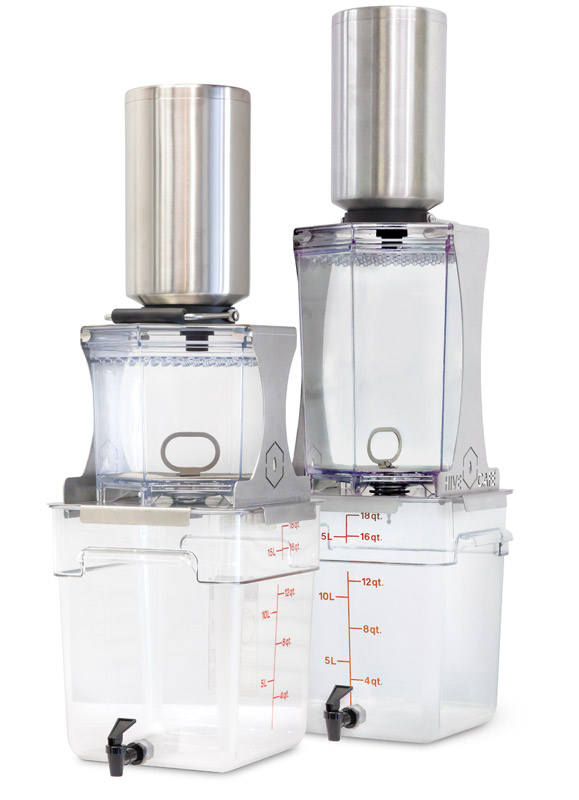
The HIVE BREW™ Café is designed for coffee shops and small chains. The fast gravity cold drip brewing process provides high TDS, espresso strength concentrated coffee that is perfect for iced drinks and affogatos. It can then be cut for RTD cold brews or for hot coffee.

The Café 3 uses 1.5 gallons of water and 3 pounds of coffee to make 0.9 gallons of typical 7.5 TDS concentrate. The concentrate can be cut with water to 6 gallons of 2 brix ready to drink cold brew.

The Café 6 uses three gallons of water and 6 pounds of coffee to produce 1.8 gallons of concentrate.

The Café Brewers are gravity brewers that require no electric or compressed air connections. They are stainless steel and food grade plastic construction and produce concentrate at espresso level strength suitable for ready to drink cold brew and a base for most of your coffee base drinks.

Brew times are super-fast at 15 to 30 minutes. The fast brew time retains the unique flavors of your blends. After a quick rinse you can be back into the next brew in a maximum of 10 minutes.

The HIVE BREW™ Café uses the same extraction method as our larger multi cell production brewers.

Learn More About HIVE BREW™ Café

The HIVE BREW™ 200 Commercial Coffee Brewer

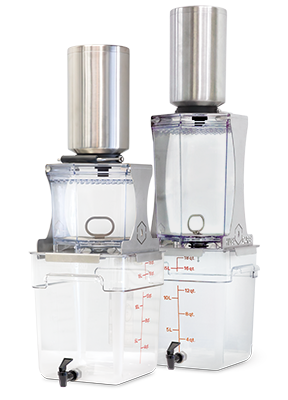
The HIVE™ 200 is an automatic single cell, production system for cold brewing coffee concentrate. It cold brews a 6-pound batch in 25 to 35 minutes. It has an automatic water supply system and an extra brew cell to allow continuous brewing.

The brew is close to “espresso” strength concentrate at an average of 7.5 TDS. Higher concentrations can be tapped off early in the brew. The 2 gallons of concentrate can be cut with water to provide 10 gallons of RTD coffee at 1.5 TDS. The automatic 200 brew system requires 110v single phase power and a 60 psi water supply. Typical output is 30 gallons of concentrate per shift.

Learn More About HIVE BREW™ 200
Semi-Automatic Hive Cold Brew Coffee System
BrewBomb Coffee Brewing Systems

BrewBomb is a master distributor for TORR's Shop and Commercial Brewers as well as a leading provider of cold coffee brewing systems. Their systems are designed to brew coffee quickly and efficiently, and are perfect for cafes, restaurants, and other businesses that serve coffee.

Hive Café Purchase Options Become a TORR Distributor

HIVE BREW™ 400Mid-range Commercial Cold Coffee Brewer

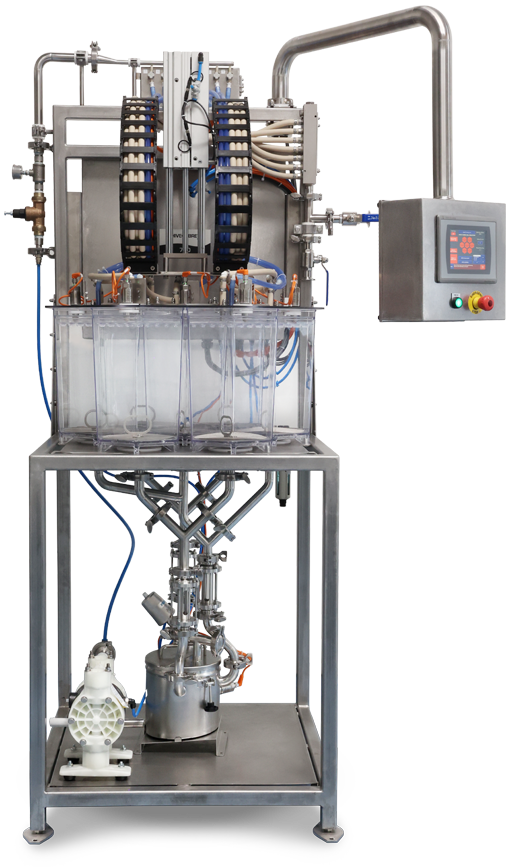
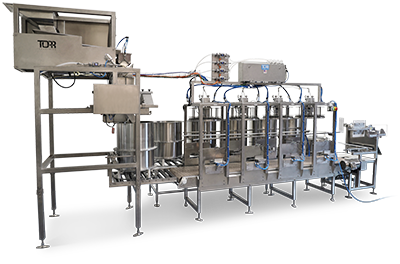
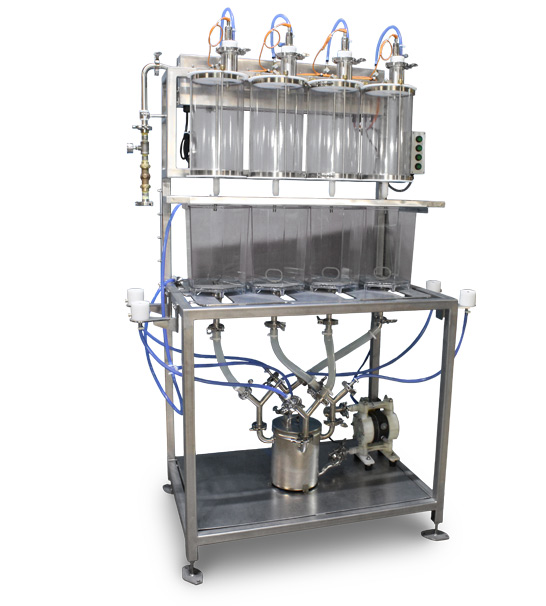
The HIVE BREW™ 400 is a mid-sized production brewer with four (4) 6-pound cells mounted in a row on one stainless steel frame. The 400 comes with an extra set of 4 brew cells for increased production efficiency.

There are four (4) separate 2.5-gallon water tanks that are automatically filled that are mounted above the brew cells. The water level in the dispersion plate on top of each cell is automatically controlled with an electronic level sensor that controls the water flow rate through the ground coffee bed.

Key Features

  • It has a CIP (clean in place) capability. Cleaning solutions can be pushed under pressure (pump supplied by others), this then goes to a plate that is placed over the cells to spray the insides of the cells and drain down through the collection tank.
  • A central collection tank for the concentrate. The tank has a level sensor and an air operated sanitary pump to move the product to an external bulk tank (supplied by others).
  • There are 4 drain down stations ( 2 on each side) located on the outside of the frame that allow the brew cells to be removed once the brew water tank has emptied. These extra “tails” are now collected and increase the yeild. This means the next brew can be started as the end of the brew drains from the cells.

Typical production is 8 gallons of concentrate at 10 Brix for every brew. Brew time is 25 to 35 minutes. The concentrate can be cut with water to produce 400 gallons of 2 Brix in a shift.

Learn More About HIVE BREW™ 400
Hive Brew Coffee Brewing Cold Brew systems
Expandable Cold Brew Coffee Systems

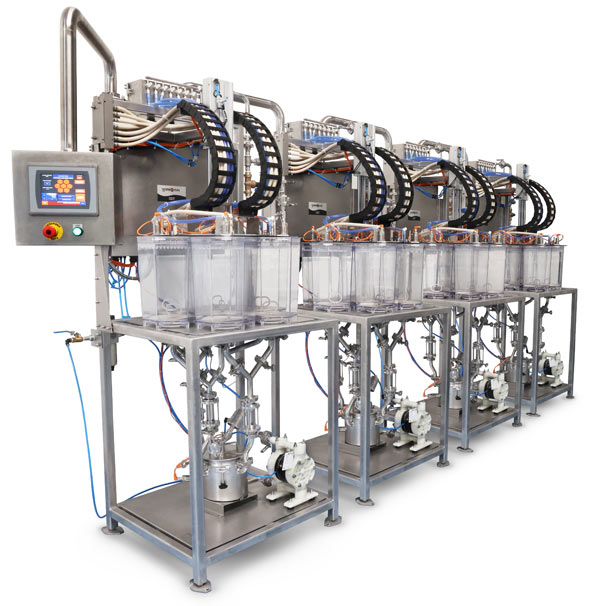
700 x 4 In-line configuration shown.

The HIVE BREW™ 700 & 701High Output Industrial Brewer

The HIVE BREW™ 700 replaces the heavy 50-pound cells on the earlier Quad Brew system with seven (7) 6-pound HIVE™ cells. This reduced labor and brew times.

Each HIVE BREW™ 700 contains 7 cells and for higher production requirements 3 additional modules can be added for what is known as the HIVE BREW™ 701 utilizing a total of 28 cells that produce up to 4,500 gallons of RTD with two people per 8-hour shift. Pre infusion is automatic with the Auto Fusion. Dump and cleanup of the equipment requires extra labor.

Learn More About HIVE BREW™ 700
HIVE BREW™ 700 video

Overview of the HIVE BREW 700 high-output industrial cold coffee brewing system, including multi-cell configuration, production workflow, and how TORR HIVE BREW systems scale from shop-level brewers to expanded in-line setups for commercial cold brew concentrate production.

Tempered Water Increases the Yield of Your Cold Brew

Warming the brew water up to 90°F improves brew yields by several % without bringing out those harsher, bitter tastes from hot brewing.

TORR offers a 20 gallon stainless steel water tempering tank to optimize your brew yields.

Includes water inlet and drain valves.

Coffee Water Tempering Tank

What on Earth is HiveBrewing?

Overview of TORR HIVE BREW cold coffee brewing and Accelerated Cold Extraction (ACE). The HIVE BREW system uses controlled drip cold water through pre-infused coffee grounds in hexagonal brew cells to produce espresso-strength ERC concentrate in under 30 minutes, replacing long immersion brew times while improving yield, consistency, and speed of service for commercial cold brew operations.

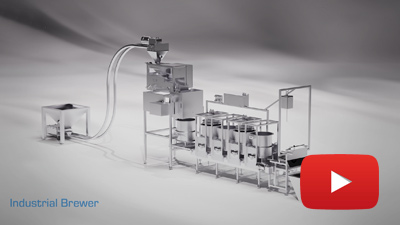
Industrial Cold Coffee Brewing Scalable Large Capacity Brewing Systems

TORR's Coffee Division offers full scale, high capacity, industrial coffee brewing system development. Our patented brewing methodologies are designed with scalability in mind. We will work with your production department to design, implement and help you manage production at any scale. Contact us here for detailed information and real world case studies.

Learn More About High Capacity Cold Coffee Brewing
High capacity cold coffee brewing systems

Initial setup featuring automatic pre-infusion, grounds conveyor & high capacity brew cells. Ready for production.

Brew into Bib video
HIVEBREW ONE at-home cold brewing

HIVEBREW ONE™

The HIVEBREW ONE creates espresso strength concentrate that is around 5 times ready to drink strength. The concentrate can be used as a low-cost base for all your cold coffee drinks. Makes great Americanos by adding hot water! Use it for Iced coffee by adding ice and cold water.

Learn More About HIVEBREW ONE™

PRE-INFUSIONAn essential step to prepare the coffee before the brew

Pre-infusion of the coffee grounds with a precise amount of water and loading the brew cell evenly with no compression is a critical step to optimize HIVE™ brew output. Use a 400 to 500 micron (medium fine) grind size.

To pre-infuse you can use a bowl or bucket and stir with a large spoon or your hands (using gloves). This is a messy process and not very hygienic. We recommend the Bloom Bag, Manual Fusion, Semi-Auto Fusion, or Auto Fusion.

TORR offers four options for pre-infusion depending on your specific production needs. Typically, we recommend 0.5 gallon of water for a 6-pound brew cell. Room temp to lukewarm water works best.

Coffee Bloom Bag

BLOOM BAG

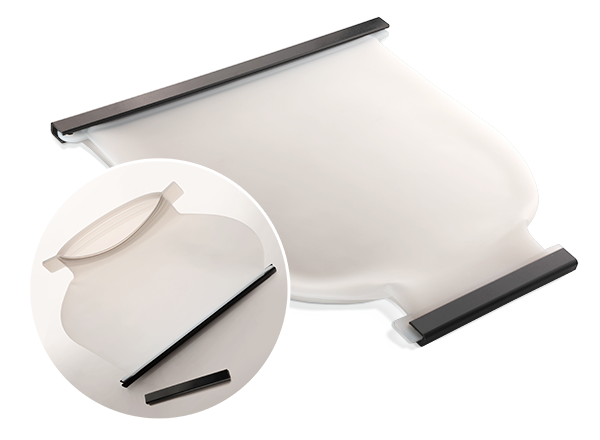
For the Cafe 3 and Cafe 6 and 200 we recommend our bloom bag to mix and prep the coffee for brewing. It can be rinsed and reused. Or you can use a large single use Ziploc bag.

Bloom bag infusion

Hey, Ray Burger, Brewbomb Cold Brew Equipment. Part of all specialty coffee processes is blooming the coffee prior to actually doing the brewing. So, that is a necessary step in our equipment because if you don't bloom the coffee first, it's hydrophobic, it's not going to work. Well, we took that idea and designed and built a purpose-built bloom bag. It's going to make it faster, easier, and cleaner. So, this is a silicone bag that is reusable. Now, we have two clips. We're going to go ahead and seal up the small end with this clip. Now, the bloom bag has these grooves in it. Now, we're going to just take that clip and we're going to feed it through in those grooves. Now, the next thing we're going to do, I've taken the stand for the Hive Cafe 3. What I'm going to do is I'm going to take two edge, I'm going to put it over here. Now, my bloom bag is easily filled with coffee and water. This is designed for 3 to 4 lb. Since we're brewing in a Hive Cafe 3, I've decided to do 3 lb of ground coffee. Now, if you're doing a Hive Cafe 6, you would do this process twice. Well, what we're going to put in is coffee and water and what we're going to take out is perfectly bloomed coffee. Okay, so we put the coffee and the water in the bloom bag. Now, what I'm going to do is I'm going to take this large opening off of my stand. Close her on up. Try to get the air out of it if I can. I'm going to take the large clip, going to slide it along this opening. Now, I've got her sealed up. First of all, I'm going to give her a little bit of a shake. Just kind of mix it up, shake it up. And once I get her kind of mixed up there, we're going to just kind of feel around in there and we're going to get all the little raisins out. Now, I'm just going to remove the clip from the small end and I'm going to empty the coffee into the brew cell. The reason we do this, if you think about putting dry coffee in this cylinder, the coffee is actually hydrophobic. If you don't bloom it first, she's not going to brew up worth a darn. From there, we would just finish the setup on our Hive Cafe 3 brewer by putting on the drip tray. From there, we would go and we would start our brew by using our tank of water. We're going to put the knob in the front. We're going to go ahead and put her on and we're going to use our priming technique where we prime the brew nozzles by filling the drip tray to approximately 3/4 full. There go our drippers. Going to drop the tank into position. We're brewing.

MANUAL FUSION™

A simple manual 6-pound infuser is available to eliminate labor.

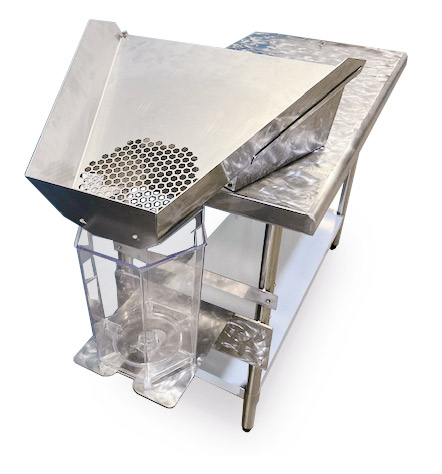
For our 200 through 400 brewers we recommend this customized stainless steel food grade table that is set up so you can load and knead the bloom bag and then empty it though a chute to break up clumps and ensure the coffee is evenly loaded into the brew cell.

Cold Brew Coffee Infusion Table

SEMI-AUTO FUSION™

The SEMI-AUTO FUSION™ pre-infuse the ground beans with water and accurately measure and load the brew cells prior to them being placed into the HIVE™ brewer.

Ground beans are transferred to the infeed hopper by hand, then to the weigh station. The weigh station then loads a paddle mixer. Water sprays are mounted over the mixer and infuse a precise amount of water with the ground beans. The paddle mixer is turned on and off by the operator. Water is measured using a water tank with a level sensor.

TThe mixer has a trap door bottom to dump the beans into the cell that is manually opened to load the cell that is manually placed under the loading chute.

Output is up to (20) 6-pound cells per hour.

AUTO FUSION™

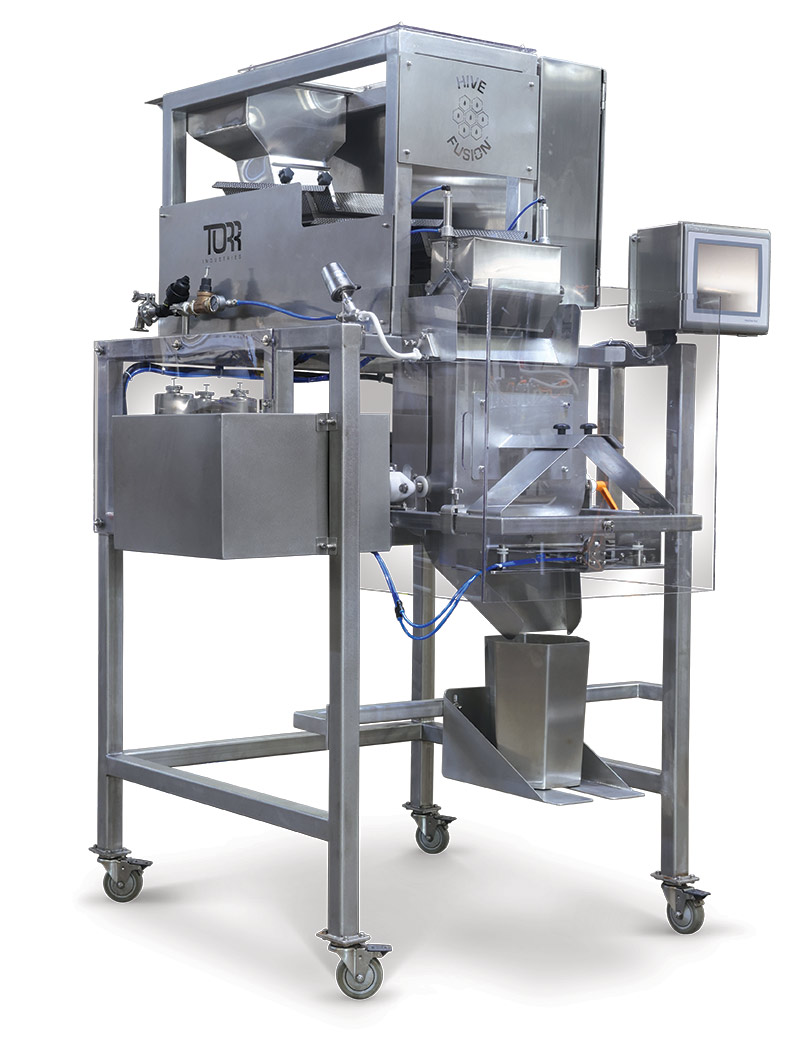
The AUTO FUSION™ is a fully automated system to pre-infuse the ground beans with water and accurately measure and load the brew cells prior to them being placed into the HIVE™ brewer.

Ground beans are transferred to the floor level infeed hopper on the AUTO FUSION™. A powered conveyor under the hopper transfers the grounds up to a weight scale. The scale then loads a paddle mixer that infuses the water with the coffee grounds. Water sprays are mounted inside the mixer and infuse a precise amount of water with the ground beans.

The mixer has a trap door bottom to dump the beans into the cell that is automatically indexed under the loading chute.

Output is up to 60 - 6-pound cells per hour.

AUTO FUSION Features

  • Eliminates hand mixing
  • Automatic measurement of the ground beans and fusion water
  • Easy operator screen preset of water to grounds
  • Fast and consistent infusion of water
  • Designed to be integrated into an automatic brewer production line
  • Can be used with most cold brewing systems
Learn More About AUTO FUSION™

HiveBrew coffee fusion system for pre infusing the coffee grounds with water to prepare for brew process

Overview of the HiveBrew Fusion pre-infusion system used before HIVE BREW extraction. Ground coffee is pre-infused with a measured amount of water, evenly loaded into the brew cell without compression, and prepared for the ACE controlled drip process that produces ERC concentrate on TORR HIVE BREW commercial cold coffee brewers.

Hive Brew Coffee Brewing Cold Brew Coffee Infusion System
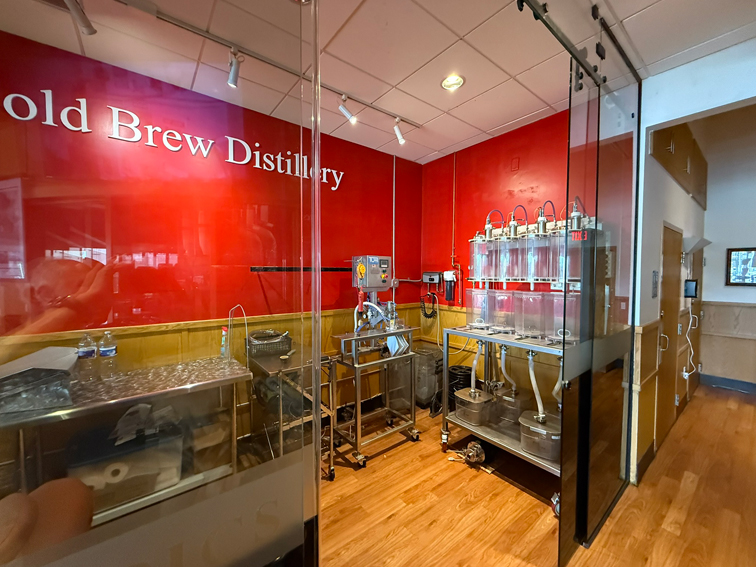
TORR's Coffee Brewing Test Kitchen, Redding California

Welcome to the
TORR HIVE BREW™ Test Kitchen

TORR has all Hive Brew models on site in our fully equipped test kitchen here in Redding, California.

We stand by the quality & taste

Interested in a Model 200 or larger? Send us your coffee beans, We will brew your coffee on a Café 6 or 200 brewer so you can experience the results for yourself.

Ship us your coffee beans and we will brew your coffee in our pilot plant and ship back your cold brew coffee, ready to cup. This offer is free with the exception of the overnight return freight and packing.

Satisfied Customers

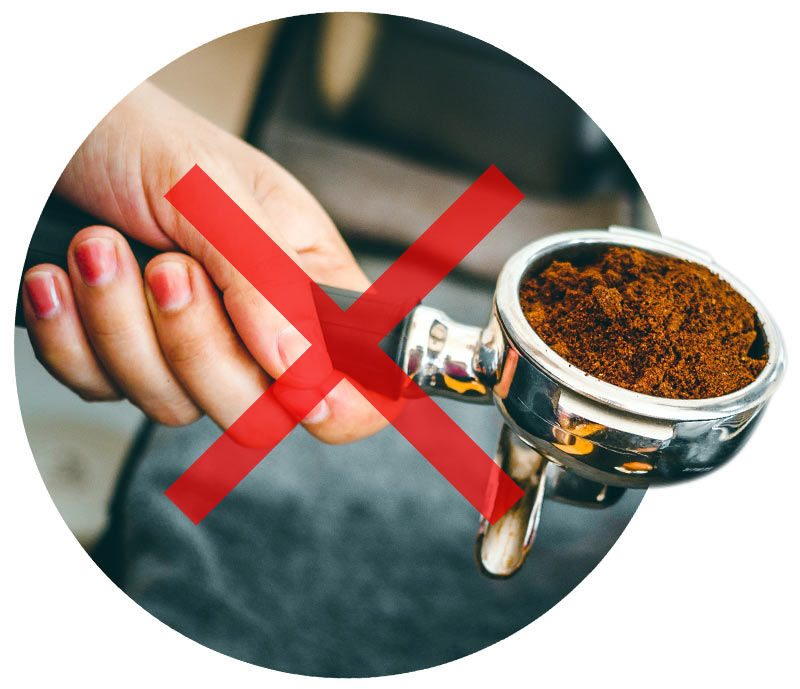
Never use espresso again

Forget Espresso Shots - Use Cold Concentrate!

  • Produce up to 180 shots of espresso level concentrate per brew.
  • The cumbersome & expensive process of hot brewing espresso for your cold drink base does not make sense.
  • Improve speed of service with simple brew, store and dispense system that creates 5 to 8 TDS concentrates with extraordinary flavors and essences that are easily dosed as a coffee drink base.

Coffee Mixology Simplified - Use ERC

  • Coffee is not just coffee anymore it’s the base for high value drinks.
  • Cold Brewed Espresso Replacement Concentrates (ERC) is the low-cost way to produce high quality flavorful coffee drink base.
  • Stop using hot espresso brewing for your cold drinks.
  • Embrace the ease of preparing delicious cold brew beverages that are easy to use.
  • No more grinding, tamping, and cleaning up messy coffee grounds.

TORR also offers...

Shelf Stable Bag in Box Filling & Portion Control Dispensing
40%Higher Yields than Immersion Brewing
30Minute Brew Times
2-28Expandable
The HIVE BREW™ Advantages

What sets our Cold Brewing Coffee Systems apart?

Up to 40% Increase in Yield Per Pound

This is achieved by using a patent-pending process that provides 16 to 22% extraction %. This compares to 10 to 15% extraction % of dissolved solids for typical bucket type immersion brewing.

Fast Brew Times of 25 to 45 Minutes

Our unique hexagonal brew cells allow 2.5 gallons of water to flow through 6 pounds of grounds that have been pre-infused with 0.5 gallons of water. The patent pending dispersion plate at the top of the cell controls the water flow evenly over the grounds and yields an average of 1-2 gallons of concentrate at 7.5 TDS. Brew time and yields are dependent on your dilution ratio, origin, roast profile, and grind.

Superior Flavor & Longer Shelf-Life

The fast brew time and the controlled water flow through the grounds allows you to capture the prime attributes of your single origins and blends. This provides a superior taste. Being able to brew quickly also provides an extended shelf-life compared to slower brewing methods.

The Brewing Process Provides High TDS Concentrate at the Beginning of the Brew

17 to 25 TDS can be extracted at the start of the brew. Up to 1 quart of ristretto espresso strength concentrate that is perfect for iced drinks or affogatos.

The Concentrate is Clear with Low Turbidity

Due to the fact, our system has no agitation of the grounds during the brew there is no need for secondary filtration. Our patent-pending, reusable, stainless-steel filter allows for ease of use and filters out the grounds. This eliminates costly throwaway filters.

Brew Cells are Easy to Handle and Clean

A loaded cell weighs less than 20 pounds so it’s easy for a Barista to handle. Cells can be rinsed between brews and sanitized daily. TORR offers automated CIP and cleaning on the 700 Brewers to minimize labor.

The HIVE BREW™ System is Easily Expandable

The HIVE BREW™ Café 3 & 6 are manual single (1) brew cell unit and requires no power or air supply. Easy to set up and uses gravity to control the water flow over the grounds. One operator can produce up to 140 gallons of RTD in a shift. This is dependent on your dilution of the concentrate. Perfect for coffee shops or small-scale production. The 700 uses the same brew cells as the 200 and is an automatic seven (7) cell module that can be expanded. It’s a semi-automated production brewer. The 7 cells produce up to 1,100 gallons of RTD per shift depending on dilution.

It’s All About the Taste and Brew Quality

If you are interested in our system TORR offers to brew your beans in our pilot plant in Redding, CA. We will record the grind, yield, and brew times with your coffee beans. You send us your coffee beans, and we will send back your cold brew to cup. The only charge is for the return freight and packing.

It’s Easy to Purchase a System, We offer financing options Here.

Frequently Asked Questions

  • How does cold brew coffee filling/brewing work with HIVE BREW?

    HIVE BREW uses Accelerated Cold Extraction (ACE): pre-infused coffee grounds are loaded into a brew cell, and cold water is passed through the grind bed at a controlled rate, extracting espresso-strength concentrate in under 30 minutes.


  • What's the difference between immersion brewing and Hive Brew?

    Immersion brewing steeps coffee grounds passively in cold water for 12-24 hours with little process control. Hive Brew is an active, controlled drip process that extracts concentrate in 25-45 minutes with 16-22% extraction, compared to 10-15% for typical immersion brewing.

  • How much cold brew coffee can a commercial HIVE BREW system produce?

    Output ranges from about 80 gallons per 8-hour shift on entry-level systems up to 4,500 gallons per 8-hour shift on the fully expanded HIVE BREW 701 with 28 cells.

  • What is ERC (Espresso Replacement Concentrate)?

    ERC is cold-brewed coffee concentrate, typically 7.5 TDS, produced by TORR's HIVE BREW systems. It's designed to replace hot-brewed espresso shots as the base for cold coffee drinks.

PATENTS TORR HOLDS MULTIPLE PATENTS, AWARDED AND PENDING